How Law Enforcement Professionals Benefit from Supplemental Defensive Tactics Training
This post is part of our Defensive Tactics training resources.
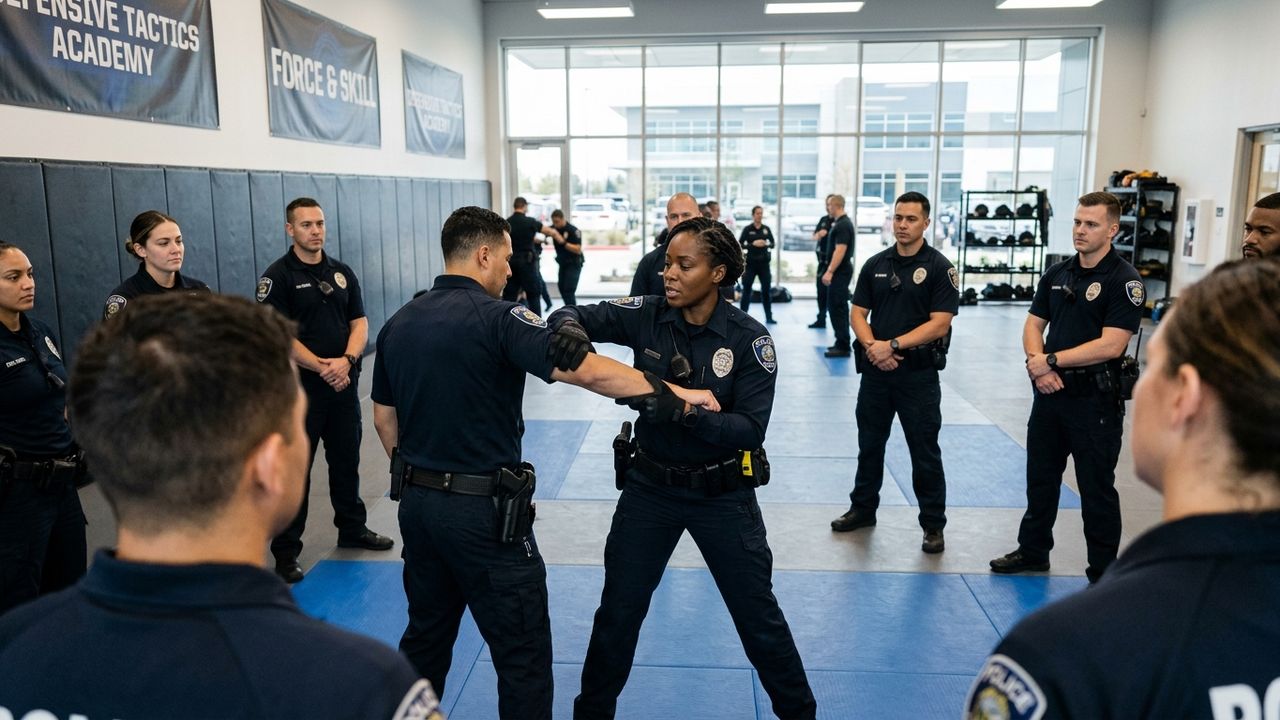
Law enforcement professionals benefit from supplemental defensive tactics training because academy instruction, while essential, cannot replicate the volume and variety of real-world encounters officers face throughout a career. Regular, scenario-driven practice outside formal qualification cycles sharpens technique, builds physical confidence, and prepares officers to respond decisively when seconds matter.
The Gap Between Academy Training and the Street
We have a deep respect for what law enforcement academies accomplish. They cover a wide curriculum under significant time pressure, and they produce officers who are ready to begin their careers. The challenge is that physical skills are perishable. Research consistently shows that motor patterns learned under low stress erode quickly when they are not reinforced, and that stress inoculation, the kind that comes from repeated high-intensity repetition, is difficult to build in a one-time block of instruction.
The FBI's Law Enforcement Officers Killed and Assaulted (LEOKA) data, published annually, documents that a significant portion of officer assaults occur during arrest situations and disturbance calls, precisely the moments where close-quarters control skills are most critical. That data reinforces what experienced officers already know: the techniques that keep you safe are the ones you have practiced so many times they become automatic.
What Does Supplemental Defensive Tactics Training Actually Cover?
When we work with law enforcement teams, we build sessions around the real situations they describe to us. That means we are not running a generic fitness class or a sport-martial-arts curriculum. We focus on practical control techniques, weapon-retention fundamentals, ground survival, and de-escalation positioning, all within a framework that respects the legal and policy environment officers operate in.
Our defensive tactics programming gives officers a layered skill set that functions under physical and psychological stress. We emphasize MDFS techniques that work for officers of varying size, strength, and fitness level, because real encounters do not sort themselves by weight class.
Why Repetition and Stress Inoculation Matter More Than Most Officers Realize
One of the most important things we teach is that technique under stress looks nothing like technique in a calm drill. When adrenaline spikes, fine motor skills degrade, tunnel vision narrows your field of awareness, and the brain defaults to whatever it has practiced most. This is not a weakness, it is human physiology. The only way to ensure that a useful technique is what the brain defaults to is to practice it at high volume and, eventually, under simulated pressure.
We build progressive stress into our sessions deliberately. Officers start with clean technique at low intensity, then we add resistance, then we add fatigue, then we add scenario pressure. By the time an officer has worked through that progression, the technique is no longer something they think about. It is something they do.
How Does Team-Based Training Improve Officer Safety?
When officers train together as a unit, something important happens beyond individual skill development. They build a shared vocabulary and a shared sense of timing. They learn how their partners move, how their partners react, and where their partners are likely to be in a dynamic situation. That kind of team cohesion is difficult to manufacture in any other setting.
We encourage departments and units to train together rather than sending individual officers to outside courses. The investment pays off in coordinated responses, clearer communication during high-stress calls, and a culture within the unit that values ongoing skill development. That culture, in our experience, is one of the strongest predictors of long-term officer safety.
Our Credentials and What They Mean for Law Enforcement Training
We understand that law enforcement professionals are discerning about who they take instruction from, and they should be. Credentials matter in this field. Our instructors hold an IKI (Israeli Krav International) Certified Instructor credential, Brazilian Black Belt credential, Monadnock Defensive Tactics (MDTS) Instructor credential, and a Personal Trainer certification. The MDTS credential is particularly relevant for law enforcement contexts, as Monadnock's control and baton systems are widely used in law enforcement and corrections agencies across the country.
We want to be clear about what we offer and what we do not. Our sessions are supplemental skill-building opportunities designed to reinforce and expand on an officer's existing training. We do not offer accredited continuing education credit or POST certification hours. What we do offer is MDTS instruction from credentialed instructors who take law enforcement training seriously.
We Come to You: Mobile Training Built Around Your Schedule
One of the most common barriers to consistent training for law enforcement teams is logistics. Shift schedules, limited travel budgets, and the challenge of getting a whole unit to an outside facility at the same time all work against regular training. We solve that problem by coming to you. We are a fully mobile training operation, and we bring our instruction directly to your department, your facility, or any location that works for your team.
We serve law enforcement agencies, departments, and teams throughout Greater New Orleans and southeastern Louisiana. Whether you need a single focused session or a recurring training program built around your unit's schedule, we will work with you to design something that fits. [Reach out today](https://incendiarytrainingservices.com/contact) to tell us about your team's needs, and we will come to you with a plan that puts better skills in your officers' hands without adding logistical headaches to their already demanding schedules.