Self-Defense for Women: What to Look for in a Quality Program in New Orleans
This post is part of our Women's Self-Defense training resources.
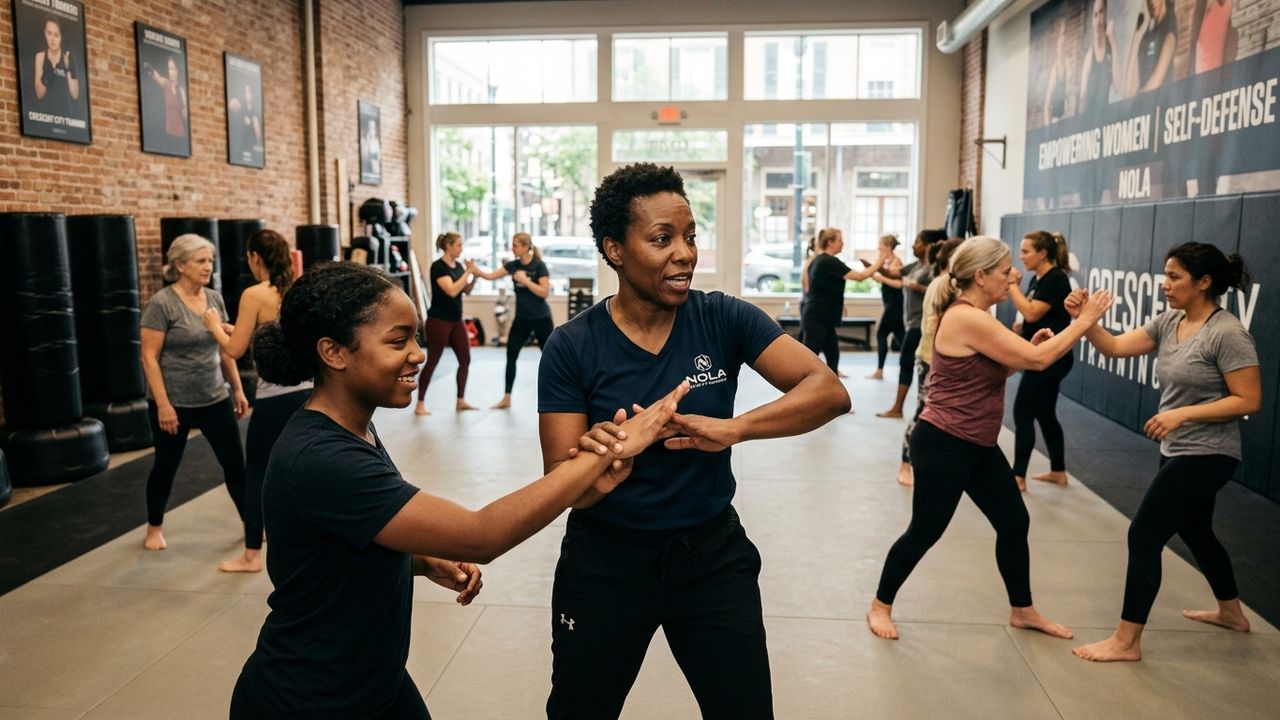
A quality women's self-defense program teaches practical, pressure-tested skills in a safe and respectful environment. It prioritizes awareness and de-escalation first, covers realistic physical techniques second, and is led by instructors with verified, relevant credentials. If a program cannot clearly explain its methodology and instructor qualifications, keep looking.
Why Women's Self-Defense Training Matters More Than Ever
The data is sobering. According to the Bureau of Justice Statistics, women experience higher rates of intimate partner violence and certain categories of violent victimization than men, and a significant portion of those incidents occur in familiar settings, not dark alleys. That reality shapes how we build every program we deliver. Training cannot guarantee an outcome, but it can dramatically shift the odds by sharpening awareness, improving decision-making under stress, and building the physical tools to create distance or escape when it matters most.
We also know that confidence is not a byproduct of self-defense training. It is a direct result of it. When participants walk away knowing they have a plan and the physical skills to execute it, something measurable changes in how they carry themselves and how they assess risk.
What Should You Actually Learn in a Women's Self-Defense Class?
This is the question we hear most often, and it is the right one to ask before you commit to any program. A well-rounded curriculum should cover several distinct layers. First, situational awareness: understanding how to read environments, recognize pre-attack indicators, and make smart decisions before a physical confrontation ever begins. Second, verbal de-escalation: how to use your voice, posture, and positioning to defuse tension or create an opportunity to disengage. Third, physical techniques: strikes, releases from common grabs, ground defense, and creating distance so you can escape.
Be cautious of programs that skip straight to physical techniques without covering the mental and behavioral layers. A punch thrown at the wrong moment, without the context of awareness and de-escalation, can escalate a situation rather than resolve it. We build every session so the physical skills sit inside a larger decision-making framework, not outside of it.
Instructor Credentials: The Non-Negotiable Standard
Anyone can print a flyer and call themselves a self-defense instructor. Credentials are how you separate professionals from hobbyists. When you evaluate a program, ask the instructor to name their certifications and the organizations that issued them. Then verify those organizations are real and that the certification requires demonstrated competency, not just a weekend seminar.
Our instructors hold an IKI (Israeli Krav International) Certified Instructor credential, Brazilian Black Belt credential, Monadnock Defensive Tactics (MDTS) Instructor credential, and a Personal Trainer certification.
That combination matters because it means we bring both the combative skill set and the physical conditioning expertise to design sessions that are effective and appropriate for participants of all fitness levels. You can learn more about how we structure our women's programming on our Women's Self-Defense service page at https://incendiarytrainingservices.com/women.
Does the Training Environment Feel Safe and Respectful?
This one is often overlooked, but it is critical. Some participants come to self-defense training carrying real experiences of violence or trauma. A program that ignores this, or worse, uses fear and shock as motivational tools, can do more harm than good. We take a trauma-informed approach to instruction. That means we explain techniques clearly before asking participants to practice them, we check in throughout the session, and we never use pressure tactics or embarrassment as teaching tools.
The environment should feel challenging and empowering, not intimidating. If you attend a session and the instructor relies on scare tactics or dismisses questions, that is a red flag. Good instructors welcome questions because questions mean participants are engaged and processing the material.
Group Training Versus Individual Training: Which Is Right for You?
Both formats have real value, and the right choice depends on your goals. Group sessions, whether for a workplace team, a sorority, a faith community, or a neighborhood group, create a shared experience that reinforces the material socially. When the people around you are practicing the same skills, accountability and retention both go up. Group formats also tend to be more cost-effective per participant, which makes them a smart choice for organizations that want to invest in their people.
Individual or small-group private sessions allow us to move at your pace and focus entirely on the scenarios most relevant to your life and environment. If you have specific concerns, a unique physical situation, or simply prefer a more personalized experience, private training is worth considering. We offer both, and we can help you figure out which format fits your needs during an initial conversation.
Red Flags to Watch for When Evaluating Any Program
We want you to make an informed decision, even if that decision is not us. Here are the warning signs that a program may not deliver what it promises. Watch out for instructors who cannot name a verifiable certifying organization, programs that claim to make you "unstoppable" or guarantee your safety, curricula that consist entirely of choreographed sequences with no live drilling or pressure testing, and sessions that treat all participants identically regardless of size, fitness level, or experience. Also be skeptical of any program that discourages questions or frames doubt as weakness.
Quality self-defense training is honest about what it can and cannot do. It builds real skills through repetition and scenario-based practice. It respects the participant's intelligence and autonomy. And it leaves people more capable and more confident than when they arrived, without overpromising outcomes.
We Bring the Training to You Across Greater New Orleans
One of the most common barriers to self-defense training is logistics. We remove that barrier entirely. We are a mobile training service, which means we come to your location, whether that is your office, your community center, your gym, your campus, or your home. We serve Greater New Orleans and southeastern Louisiana, and we work with individuals, corporate teams, faith organizations, and community groups of all sizes.
If you are ready to build real skills in a respectful, professional environment, we are ready to bring the training to you. [Reach out today](https://incendiarytrainingservices.com/contact) to tell us about your group, your goals, and your location. We will put together a session that fits your needs and comes directly to you, wherever you are in Greater New Orleans and southeastern Louisiana.


