Why Every Business Should Train Employees for Workplace Violence Prevention
This post is part of our Corporate Safety training resources.
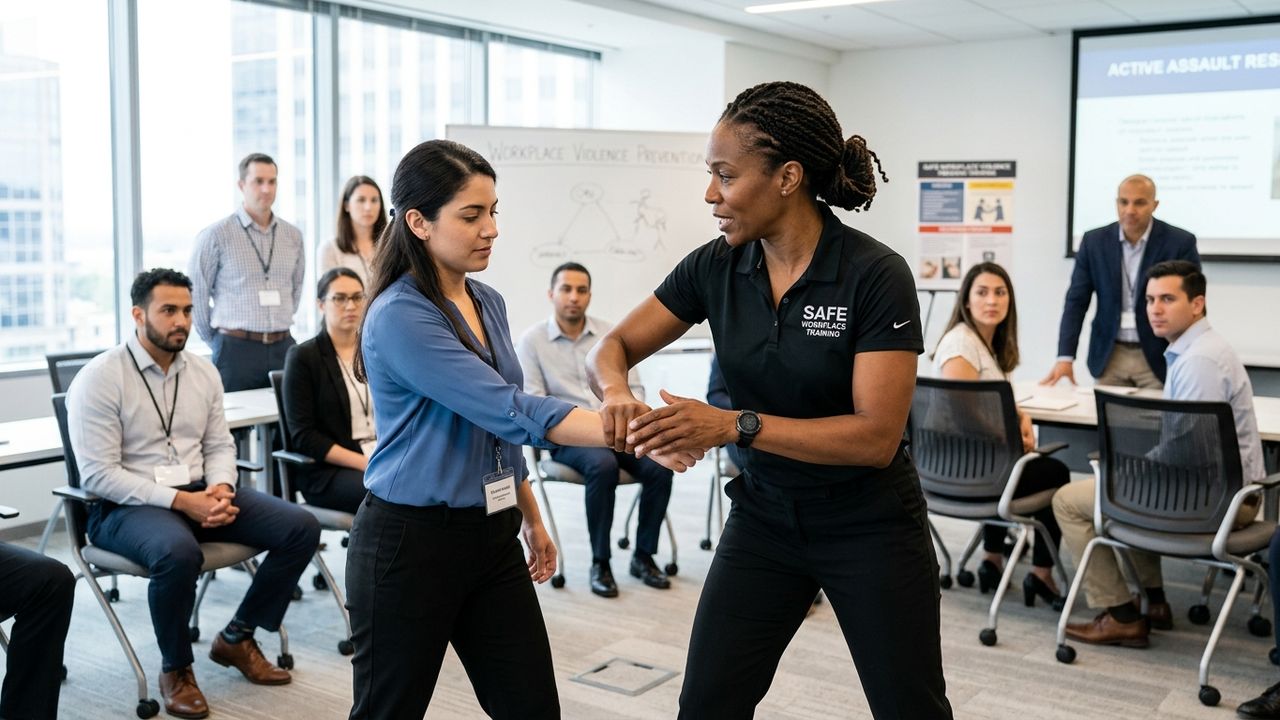
Every business, regardless of size or industry, has a responsibility to prepare its people for the possibility of workplace violence. Waiting for an incident to happen before taking action is not a strategy. Proactive workplace violence prevention training builds awareness, sharpens decision-making, and gives employees practical tools they can actually use when it matters most.
The Scope of the Problem Is Bigger Than Most Employers Realize
Workplace violence is not limited to high-profile active shooter events. According to OSHA, workplace violence is one of the leading causes of job-related deaths in the United States, and it encompasses a wide spectrum of behavior, from threats and harassment to physical assault. It happens in offices, retail spaces, healthcare settings, warehouses, and everywhere in between.
Most employees have never been taught how to recognize warning signs, respond to an escalating situation, or protect themselves if things turn physical. That gap in preparedness is a liability, and it is one that training can close. We work with corporate teams across Greater New Orleans to help organizations stop treating safety as an afterthought.
What Does Effective Workplace Violence Prevention Training Actually Cover?
Good training goes well beyond a slideshow presentation or a printed policy handout. When we deliver workplace violence prevention training, we focus on three interconnected layers: recognition, de-escalation, and physical response.
Recognition means teaching your team to identify behavioral warning signs before a situation escalates. Most violent incidents do not appear out of nowhere. There are usually observable cues that a trained eye can catch early.
De-escalation skills give employees verbal and non-verbal tools to reduce tension and create space. This is often the most undervalued component of workplace safety, and it is frequently the one that prevents a situation from becoming physical at all.
Physical response training, rooted in our IKI Certified Instructor curriculum, prepares employees to protect themselves and others when de-escalation is no longer an option. Our defensive tactics instruction focuses on practical, high-percentage techniques that work under stress, not choreographed moves that fall apart in a real situation. You can learn more about what we teach on our [Defensive Tactics service page](https://incendiarytrainingservices.com/services/defensive-tactics).
Why Passive Policies Are Not Enough
Many organizations believe that having a written workplace violence policy in the employee handbook is sufficient. It is not. A policy tells people what the rules are. Training teaches people what to do when those rules are being broken in real time, under pressure, with adrenaline running high.
The DHS "Run, Hide, Fight" framework is a useful starting point, but it leaves enormous gaps. Most employees have never practiced running from a threat, have no idea how to barricade a door effectively, and have certainly never been coached on what to do if fighting back becomes the only option. We fill those gaps with hands-on, scenario-based instruction delivered in your actual workspace.
What Should a Business Do to Build a Culture of Safety?
Building a genuine safety culture starts at the leadership level. When managers and executives participate in training alongside their teams, it sends a clear message that preparedness is a shared priority, not just a box to check for HR compliance. We encourage organizations to bring their entire team to the table, from front-line staff to senior leadership.
Consistent, recurring training also matters. A one-time session is better than nothing, but skills erode without reinforcement. We recommend scheduling refresher sessions at least annually, and more frequently for teams in higher-risk environments such as healthcare, retail, or late-night service industries. We make that easy because we come to you, wherever your team is located.
The Business Case: Liability, Morale, and Retention
Beyond the obvious moral obligation to protect your people, there is a compelling business case for investing in workplace violence prevention training. Organizations that fail to provide a reasonably safe work environment can face significant legal and financial exposure following a violent incident. OSHA's General Duty Clause requires employers to provide a workplace free from recognized hazards, and courts have consistently held that foreseeable violence qualifies as one of those hazards.
There is also a measurable impact on employee morale and retention. People want to work for organizations that take their safety seriously. When employees know their employer has invested in real, practical training, it builds trust and loyalty. That is a competitive advantage that shows up in your culture long before it ever shows up in an incident report.
How We Deliver Training That Actually Sticks
We are not a seminar company. We do not show up with a projector and a packet of handouts and call it a day. Our instruction is physical, scenario-driven, and built around the specific environment your team operates in. We train in your space because that is where the skills need to work.
Our instructors hold an IKI (Israeli Krav International) Certified Instructor credential, Brazilian Black Belt credential, Monadnock Defensive Tactics Instructor credential, and a Personal Trainer certification, bringing a combination of tactical knowledge and an understanding of how people learn and perform under physical stress. We design every session to be accessible regardless of fitness level or prior experience, because real-world safety skills should be available to everyone on your team, not just the most athletic people in the room.
If your organization is ready to move from passive policies to active preparedness, we are ready to help. We proudly serve businesses throughout Greater New Orleans and southeastern Louisiana, and because we are fully mobile, we come to your location so your team can train in the environment they actually work in. Reach out today! (https://incendiarytrainingservices.com/contact) to schedule a consultation and find out how we can build a workplace violence prevention training program that fits your team, your space, and your goals.


