How New Orleans Businesses Can Train Remote and Satellite Teams for Active Threat Response
This post is part of our Corporate Safety training resources.
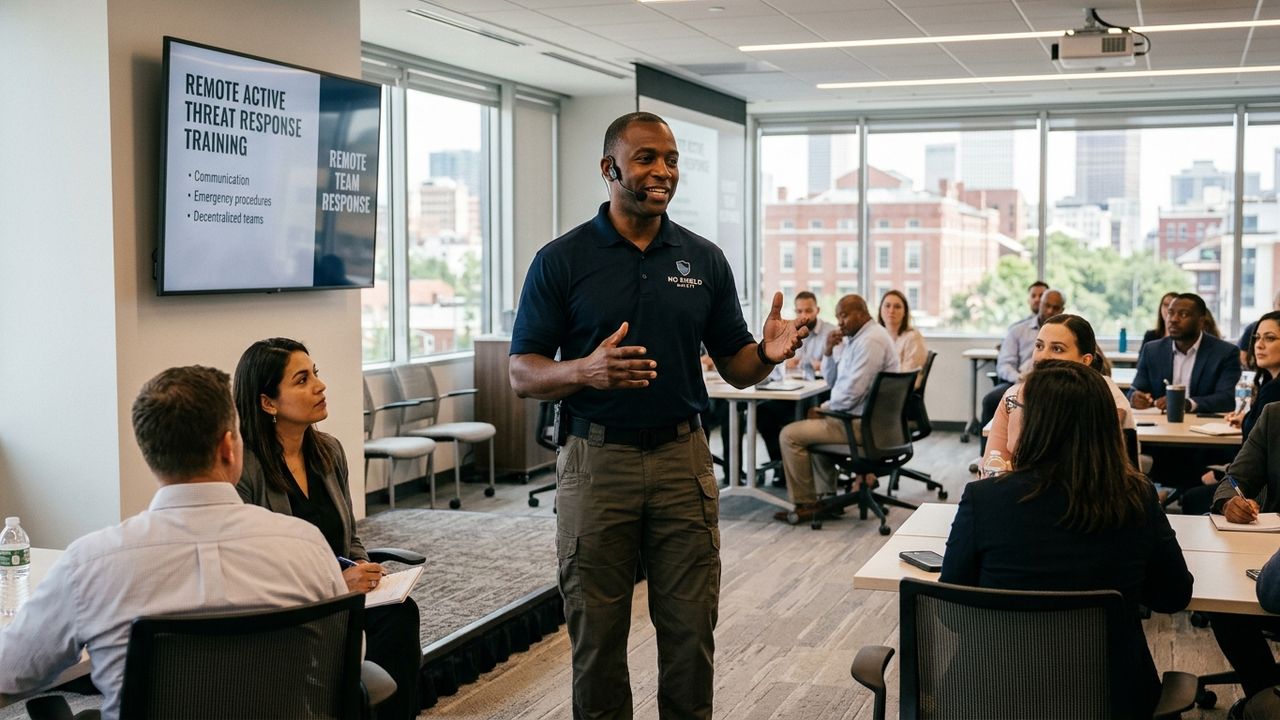
New Orleans businesses with remote or satellite teams can absolutely train every location for active threat response, and the most effective way to do it is to bring qualified instruction directly to each site. Waiting for employees to travel to a central training facility creates gaps. A mobile training model closes those gaps by meeting your people where they already work.
Why Distributed Teams Face a Unique Safety Challenge
When your workforce is spread across multiple offices, warehouses, or field locations, a single centralized safety training rarely reaches everyone. Employees at a satellite office in Metairie or a branch location on the Northshore may never receive the same preparation as your downtown New Orleans headquarters team. That inconsistency is a real liability, not just an administrative inconvenience.
The FBI's research on active shooter incidents consistently shows that most events are over in minutes, often before law enforcement can respond. That data underscores a critical point: the people already inside your building are the first line of response. If your satellite team has never practiced a structured response protocol, they are making decisions under extreme stress with no framework to guide them. We believe every employee at every location deserves better than that.
What Does Effective Active Threat Response Training Actually Cover?
Good active threat response training is not a PowerPoint presentation and a quiz. It is hands-on, scenario-based, and built around the specific environment where your team actually works. When we come to your location, we assess the physical space, identify chokepoints and exit routes, and tailor the instruction to what your employees will realistically encounter.
Our curriculum covers several interconnected skill sets. We start with situational awareness, helping employees recognize early behavioral indicators before a situation escalates. We move into de-escalation communication, giving teams practical verbal tools for managing a threatening encounter. We then address the physical response layer, including how to create distance, use available barriers, and, when all other options are exhausted, how to defend against a physical attack. Our instructors hold an IKI (Israeli Krav International) Certified Instructor credential, Brazilian Black Belt credential, Monadnock Defensive Tactics (MDTS) Instructor credential, and a Personal Trainer certification.
How We Structure Training Across Multiple Sites
Because we are fully mobile, we build a training schedule that works around your operations rather than disrupting them. For businesses with multiple locations, we typically coordinate a rolling schedule, visiting each site in sequence so that every team receives consistent instruction without requiring anyone to leave their workplace. This approach also means the scenarios we run are grounded in the actual layout of each specific office or facility, which makes the training far more transferable to real behavior under stress.
We also offer a train-the-trainer component for larger organizations that want to maintain ongoing readiness between our visits. Designated safety leads or team captains can receive deeper instruction so they can reinforce core concepts with their colleagues on a regular basis. This creates a culture of preparedness rather than a one-time checkbox event.
Why New Orleans Businesses Should Prioritize This Now
OSHA's General Duty Clause requires employers to provide a workplace free from recognized hazards, and workplace violence is explicitly identified as one of those hazards. That is not a scare tactic. It is a legal and ethical obligation that every employer in Louisiana carries. Proactive training demonstrates that your organization takes that obligation seriously, and it gives your employees something genuinely valuable: the confidence that comes from knowing what to do.
Beyond compliance, there is a retention and culture argument worth making. Employees who feel safe at work are more engaged and more loyal. When leadership invests in practical safety skills rather than laminated posters on a break room wall, it sends a clear message that the people in the building matter. We have seen that shift happen in real time during our corporate sessions, and it is one of the most rewarding parts of what we do.
What Should a Business Do Before Scheduling Active Threat Response Training?
Before we arrive at any location, we recommend that leadership take a few preparatory steps. First, review your existing emergency action plan and identify where it is silent on active threat scenarios. Most plans cover fire and weather emergencies but leave a significant gap around human-initiated violence. Second, identify a point of contact at each satellite location who can help coordinate logistics and communicate with employees ahead of the session. Third, be honest with your team about what the training is and why it matters. Employees who understand the purpose of a session engage more fully and retain more.
You can learn more about how we structure programs for corporate teams on our Corporate Safety services page. We outline the full scope of what we offer and how we customize each engagement for the specific needs of your organization.
Building a Consistent Safety Culture Across Every Location
Consistency is the word we come back to again and again when we talk about multi-site organizations. A safety culture is only as strong as its weakest location. If your Baton Rouge satellite team has never run through a lockdown drill or practiced a verbal de-escalation scenario, they are operating at a disadvantage compared to your main office. Our goal is to eliminate that disparity entirely by bringing the same quality of instruction to every door.
We also encourage organizations to schedule refresher sessions at least annually. Skills degrade without practice, and personnel turn over. A team that trained two years ago and has since onboarded a dozen new employees has a readiness gap that needs to be addressed. We make it easy to stay current because we come to you, on your schedule, at your location.
If your business is ready to close the safety gap across your remote and satellite teams, we are ready to help. We serve Greater New Orleans and all of southeastern Louisiana, and because we are fully mobile, we come to you wherever your teams are located. Reach out today to start a conversation about building a consistent, practical active threat response program for every location in your organization.


