How Property Management Companies Can Reduce Liability Through Staff Safety Training
This post is part of our Corporate Safety training resources.
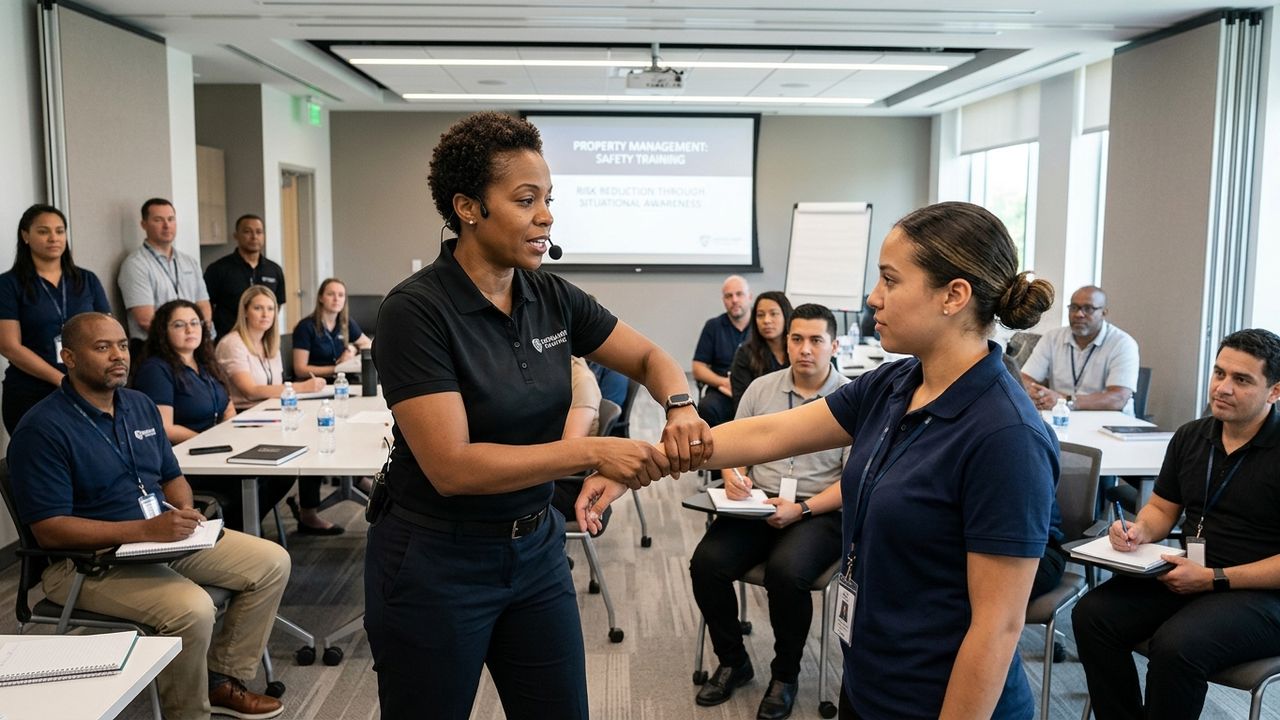
Property management companies can meaningfully reduce liability by investing in structured workplace safety training for property managers and their teams. When staff know how to recognize warning signs, de-escalate tense interactions, and protect themselves if a situation turns physical, organizations demonstrate a duty of care that matters both in court and in day-to-day operations.
Why Property Management Is a Higher-Risk Industry Than Most People Realize
Leasing agents, maintenance technicians, and property supervisors regularly work alone, enter occupied units, handle disputes between residents, and manage after-hours emergencies. That combination of isolation, conflict, and unpredictability puts property management staff in a category that OSHA identifies as facing elevated workplace violence risk, particularly workers who interact with the public, handle money or valuables, or work in community settings.
The risks are not hypothetical. Verbal threats, physical confrontations, and harassment incidents happen across property types, from luxury apartment communities to commercial office parks. When those incidents occur without any documented safety protocol in place, the legal and financial exposure for the management company can be significant.
What Does Liability Reduction Actually Look Like in Practice?
Liability reduction is not about eliminating every possible risk. It is about demonstrating that your organization took reasonable, documented steps to prepare your team. Courts, insurers, and regulators all look at whether a company had a safety program in place and whether employees were trained to follow it.
Practical liability reduction through training includes several layers. First, de-escalation skills give staff the tools to defuse a confrontation before it becomes a use-of-force situation. Second, situational awareness training helps employees recognize pre-attack indicators and remove themselves from danger early. Third, basic defensive tactics provide a last-resort physical skill set for situations where verbal strategies have failed. Together, these layers create a documented, defensible safety framework.
The Real Cost of Doing Nothing
OSHA has long maintained that employers have a general duty to provide a workplace free from recognized hazards, including workplace violence. When a property management company has no training program, no documented protocols, and no record of staff preparation, that gap becomes a liability in any post-incident investigation or civil claim.
Beyond legal exposure, there is a human cost. Staff who feel unprepared are more likely to freeze, escalate unintentionally, or leave the company after a frightening incident. High turnover in property management is already a persistent challenge. Investing in safety training signals to your team that their wellbeing matters, which supports retention and morale alongside risk management.
What Should Property Management Safety Training Actually Cover?
Effective workplace safety training for property managers is not a generic seminar. It should be scenario-based, role-specific, and grounded in the actual situations your staff encounter. We build our corporate sessions around the real environment your team works in, whether that means a leasing office, a maintenance bay, a parking structure, or a resident common area.
Core topics we cover for property management teams include verbal de-escalation and boundary-setting, recognizing behavioral warning signs before a situation escalates, safe positioning and environmental awareness, basic escape and evasion techniques, and protocols for lone-worker situations. We also address how to document incidents properly, which directly supports your legal and HR processes after the fact.
Our instructors hold an IKI (Israeli Krav International) Certified Instructor credential, Brazilian Black Belt credential, Monadnock Defensive Tactics (MDTS) Instructor credential, and a Personal Trainer certification.
How We Tailor Training for Corporate and Property Management Teams
We understand that property management teams are not security personnel. They are professionals whose primary job is operations, customer service, and facilities management. Our training respects that context. We do not train staff to act as enforcement. We train them to protect themselves, communicate effectively under stress, and get out of dangerous situations safely.
Our corporate safety programs are designed to fit into a workday without requiring a full facility or special equipment. You can learn more about what we offer at our Corporate Safety service page (https://incendiarytrainingservices.com/services/corporate). We structure sessions to accommodate mixed teams, varying fitness levels, and tight schedules, so training actually happens rather than getting postponed indefinitely.
Building a Culture of Safety That Sticks
A single training session is a strong start, but a safety culture is built over time. We encourage property management companies to think about training as an ongoing investment rather than a one-time checkbox. Annual refreshers, onboarding sessions for new hires, and periodic scenario reviews keep skills sharp and keep safety top of mind for your team.
When leadership visibly prioritizes safety training, it communicates something important to staff: we take your wellbeing seriously. That message reduces anxiety, improves confidence in difficult interactions, and creates a team that handles pressure more effectively across the board.
If you manage properties in Greater New Orleans or southeastern Louisiana and you are ready to give your team practical, scenario-based safety skills, we are ready to come to you. We are fully mobile, so we bring the training directly to your location. [Reach out today](https://incendiarytrainingservices.com/contact) to talk through your team's needs and schedule a session that fits your operation.


