How to Evaluate a Self-Defense Course: What to Look For and What to Avoid
This post is part of our Self-Defense Training training resources.
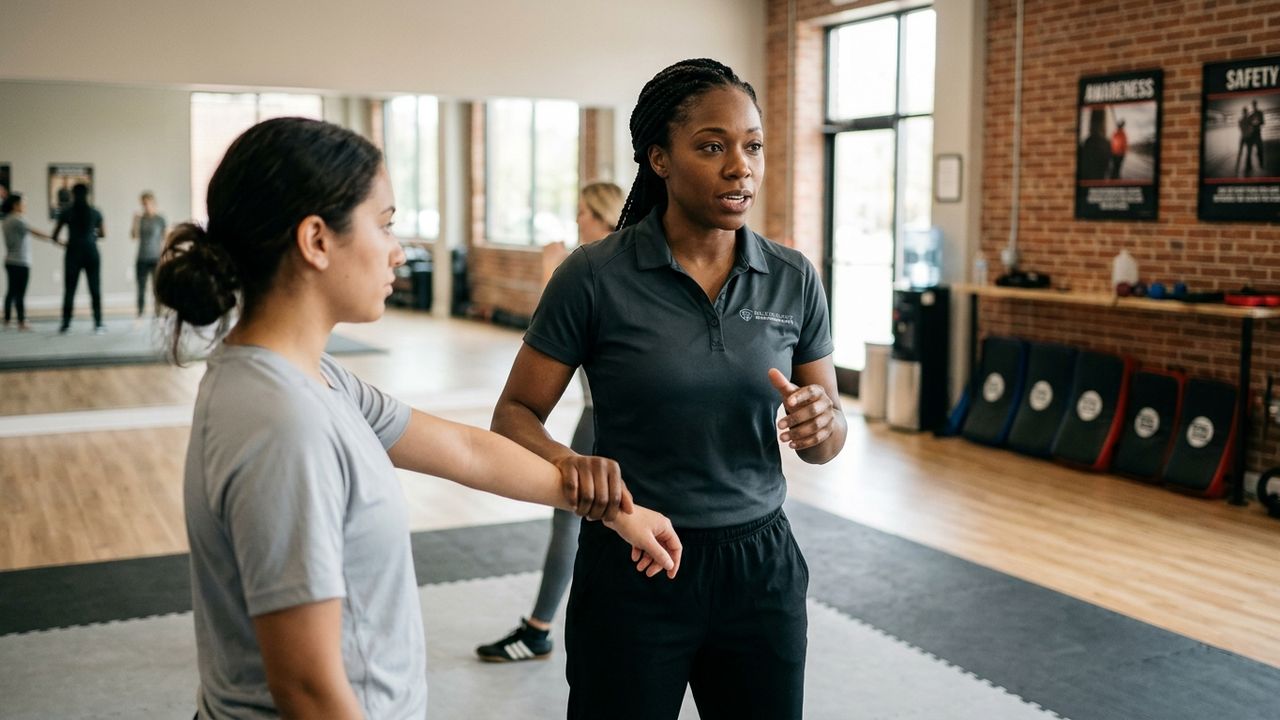
To evaluate a self-defense course well, look at three things first: the verified credentials of the instructors, the realism of the curriculum, and whether the training includes scenario-based pressure testing. If a program cannot clearly answer those three questions, keep looking. The right course builds skills that hold up under stress, not just in a calm classroom.
Why This Decision Matters More Than Most People Realize
Workplace violence is not a rare edge case. According to the Occupational Safety and Health Administration (OSHA), nearly 2 million American workers report being victims of workplace violence each year, and that figure does not capture the many incidents that go unreported. When people decide to invest in self-defense or defensive tactics training, the stakes are real. Choosing the wrong program does not just waste money. It can create false confidence, which is arguably more dangerous than no training at all.
We work with corporate teams, law enforcement professionals, and civilians across Greater New Orleans, and we hear the same concern regularly: someone attended a course, felt good in the moment, and later realized the techniques would not hold up in a real confrontation. That gap between perceived skill and actual skill is exactly what we are here to help you close. Our self defense programs are built to bridge that gap, but no matter who you train with, the evaluation framework below will help you make a smarter choice.
What Credentials Should You Actually Verify?
Credentials are not everything, but they are a meaningful starting point. Anyone can film a highlight reel or print a certificate from a weekend seminar. What you want to see is verifiable, lineage-backed training from recognized organizations. Ask the provider directly: where were you certified, who certified you, and is that certification current?
For context, our instructors hold an IKI (Israeli Krav International) Certified Instructor credential, Brazilian Black Belt credential, Monadnock Defensive Tactics (MDTS) Instructor credential, and a Personal Trainer certification. Each of those credentials represents a specific body of knowledge with defined standards. When you ask a provider about their qualifications, you should receive that level of specificity, not vague references to years of experience alone.
Look at the Curriculum: Realism Over Performance
A strong self-defense curriculum teaches techniques that work under stress, not just in a cooperative drill. Watch for these positive signs: the course addresses multiple threat types (grabs, strikes, weapon threats), it includes verbal de-escalation alongside physical skills, and it progresses from basic mechanics to live scenario practice. Situational awareness and pre-attack recognition should also be part of the conversation, not an afterthought.
Red flags in a curriculum include: techniques that require exceptional athleticism or flexibility to execute, sequences with too many steps to recall under adrenaline, and a complete absence of pressure testing or resistance from a training partner. If every drill ends perfectly and no one ever struggles, the training environment is not preparing you for reality.
Does the Provider Understand Your Specific Context?
A corporate team, a law enforcement officer, and a civilian all face different threat environments. A quality provider asks questions before designing a program. They want to know your setting, your team's physical baseline, and what specific risks or scenarios concern you most. Generic one-size-fits-all content has its place for basic awareness, but it should not be the only thing on offer.
We tailor every program to the group in front of us. A corporate team focused on workplace de-escalation needs different emphasis than a law enforcement unit looking to sharpen control and restraint skills. Context-specific training is not a luxury. It is what makes the difference between skills that transfer and skills that fade.
What Are the Biggest Red Flags to Avoid?
Some warning signs are easy to miss when you are excited about a program. Here are the ones we see most often. First, guaranteed outcomes. No ethical instructor promises that training will keep you safe in every situation. Training improves your odds and your options. Anyone who claims otherwise is selling you something. Second, no liability or safety protocols. A professional provider has waivers, safety guidelines, and a clear warm-up and cool-down structure. If none of that exists, the instructor is not treating your physical wellbeing seriously. Third, no references or reviews. Ask for client testimonials, references from past corporate or organizational clients, or verifiable reviews. A provider with a real track record will have them readily available.
Logistics Matter: Accessibility and Delivery Format
Even the best curriculum loses value if your team cannot realistically attend. Consider whether the provider comes to you or requires everyone to travel to a fixed facility. For corporate groups, law enforcement units, or any team with scheduling constraints, mobile instruction removes one of the biggest barriers to consistent training. We are a fully mobile operation, which means we bring the training to your location and work within your schedule.
Also consider group size and format. A seminar for 200 people has different value than a hands-on session for a team of 12. Smaller, more interactive formats allow instructors to give real-time feedback and correct technique before bad habits form. Ask the provider what their ideal group size is and why.
Making the Final Call
When you put it all together, evaluating a self-defense course comes down to a short checklist: verified instructor credentials, a realistic and progressive curriculum, context-specific design, transparent safety practices, and a delivery format that works for your team. Price matters, but it should not be the first filter. A cheap course that builds false confidence is more costly in the long run than a well-designed program that actually prepares people.
We serve Greater New Orleans and southeastern Louisiana, and because we are fully mobile, we come directly to your team wherever you are. If you want to talk through what a program tailored to your group would look like, Reach out today and we will start the conversation.
