Self Defense Training for Teachers: Preparing School Staff for Physical Threats
This post is part of our Defensive Tactics training resources.
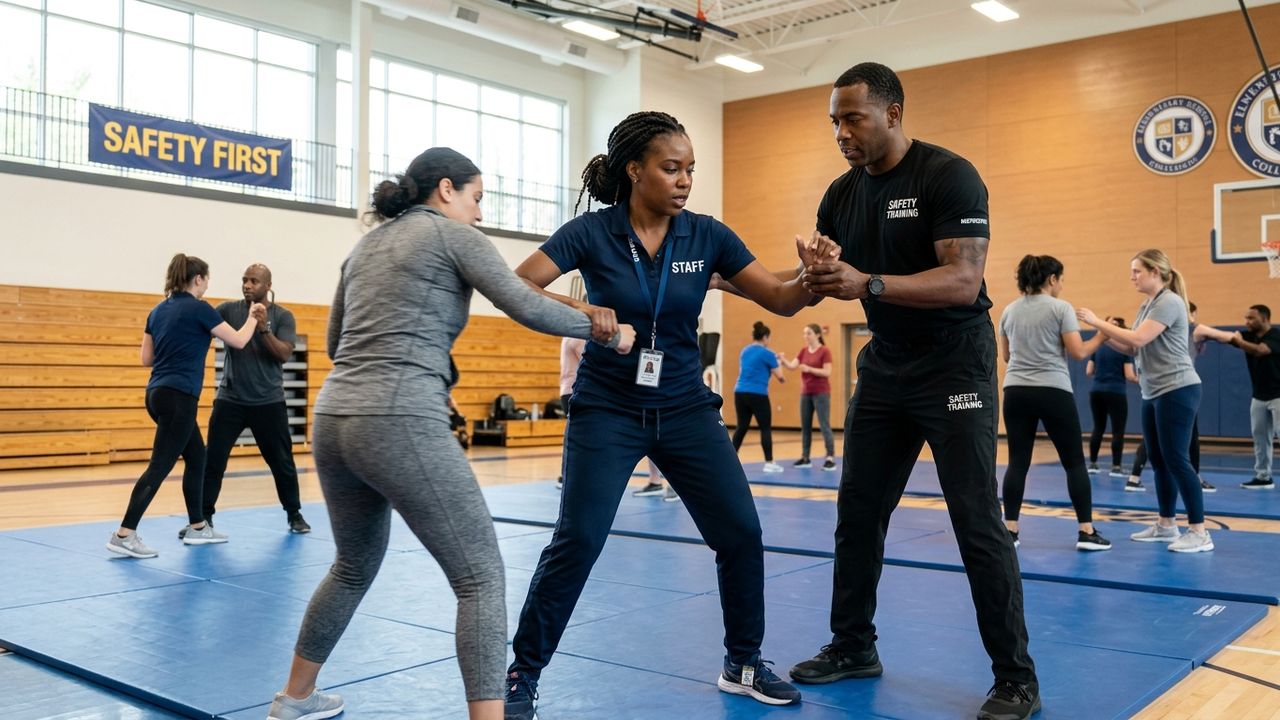
Yes, self defense training for teachers is not only appropriate, it is genuinely necessary. Educators are responsible for the safety of dozens of students every single day, yet most receive little to no training on how to physically manage a threat. A focused defensive tactics program gives school staff the awareness, de-escalation skills, and physical tools to respond more effectively when a situation turns dangerous.
Why Schools Are Not as Safe as We Assume
We want to be straightforward with you: schools are workplaces, and workplaces carry real violence risk. According to the FBI's research on active shooter incidents and the U.S. Department of Education's data on school-based violence, educational environments consistently appear among the settings where targeted violence and assault occur. Teachers are not immune to physical confrontations with students, parents, or outside individuals who enter a campus. Assaults on school staff, including hitting, grabbing, and more serious attacks, are documented annually across the country.
Most educators are trained to call for help, lock a door, or follow an emergency protocol. Those steps matter. But protocols have gaps, and in the seconds before help arrives, a teacher may be the only thing standing between a student and serious harm. That is the gap we help close.
What Does Defensive Tactics Training Actually Look Like for Educators?
When we design a program for school staff, we are not putting teachers through a martial arts boot camp. Our approach through our Defensive Tactics curriculum is built around realistic, high-stress scenarios that educators actually face. We cover threat recognition and situational awareness, verbal de-escalation techniques, physical disengagement from grabs and holds, creating distance and controlling space in a classroom environment, and basic principles for protecting students while managing a threat.
We keep the techniques simple and repeatable. Under stress, complex motor skills break down. What holds up is foundational body mechanics, clear decision-making frameworks, and practiced muscle memory. We train teachers the same way we train other professionals who need reliable skills without years of dedicated martial arts study.
De-Escalation Comes First, Every Time
We want to be clear about something that sometimes gets lost in conversations about physical training: the best outcome in any threatening situation is one where no physical contact happens at all. That is why de-escalation is not a soft add-on to our curriculum. It is the foundation. We teach educators how to read behavioral cues that signal escalating aggression, how to use voice tone, body language, and positioning to reduce tension, and how to create space and time for a situation to cool down.
Physical defensive skills are the last resort. We train them because last resorts happen, and being unprepared for them is not a neutral position. But we never frame physical force as the first or preferred response. That distinction matters enormously for educators who work in environments built on trust and relationship.
Who Should Attend This Training?
We recommend this training for any adult who works on a school campus. That includes classroom teachers, paraprofessionals and aides, front office and administrative staff, counselors and social workers, coaches and physical education staff, and campus supervisors. Everyone who interacts with students or the public in a school setting carries some level of exposure to physical risk. A unified team that has trained together also responds more cohesively in a real emergency, which benefits everyone on campus.
What Qualifications Back Our Instruction?
We bring a serious credential base to every training we deliver. Our instructors hold an IKI (Israeli Krav International) Certified Instructor credential, Brazilian Black Belt credential, Monadnock Defensive Tactics (MDTS) Instructor credential, and a Personal Trainer certification. That combination means we draw from proven self-defense systems, real-world defensive tactics frameworks used by professionals, and an understanding of how the body moves and responds under physical stress. We do not teach theory. We teach skills that have been tested and refined across multiple disciplines.
How Do We Structure a School Staff Training Session?
Because we are a mobile training service, we come to your campus or facility. You do not need a gym or a dedicated training space. We work with what you have, whether that is a cafeteria, a gymnasium, a multipurpose room, or an outdoor courtyard. We design each session around your staff size, your schedule, and the specific threat scenarios most relevant to your environment.
A typical school staff session includes a threat awareness and mindset block, a verbal de-escalation skills block, hands-on physical technique practice with scenario-based repetitions, and a debrief that connects the skills to your school's existing emergency protocols. We can deliver a focused half-day workshop or a more comprehensive full-day program depending on your goals. For schools that want to build lasting capability, we also offer follow-up sessions to reinforce and expand on what was covered.
If your school or district is ready to give your staff the skills they deserve, we are ready to bring the training directly to you. We serve Greater New Orleans and southeastern Louisiana, and because we are fully mobile, we come to your location on your schedule. [Reach out today](https://incendiarytrainingservices.com/contact) to talk through your team's needs and build a program that fits your campus.


