Why Scenario-Based Self-Defense Training Prepares You Better Than Drills Alone
This post is part of our Self-Defense Training training resources.
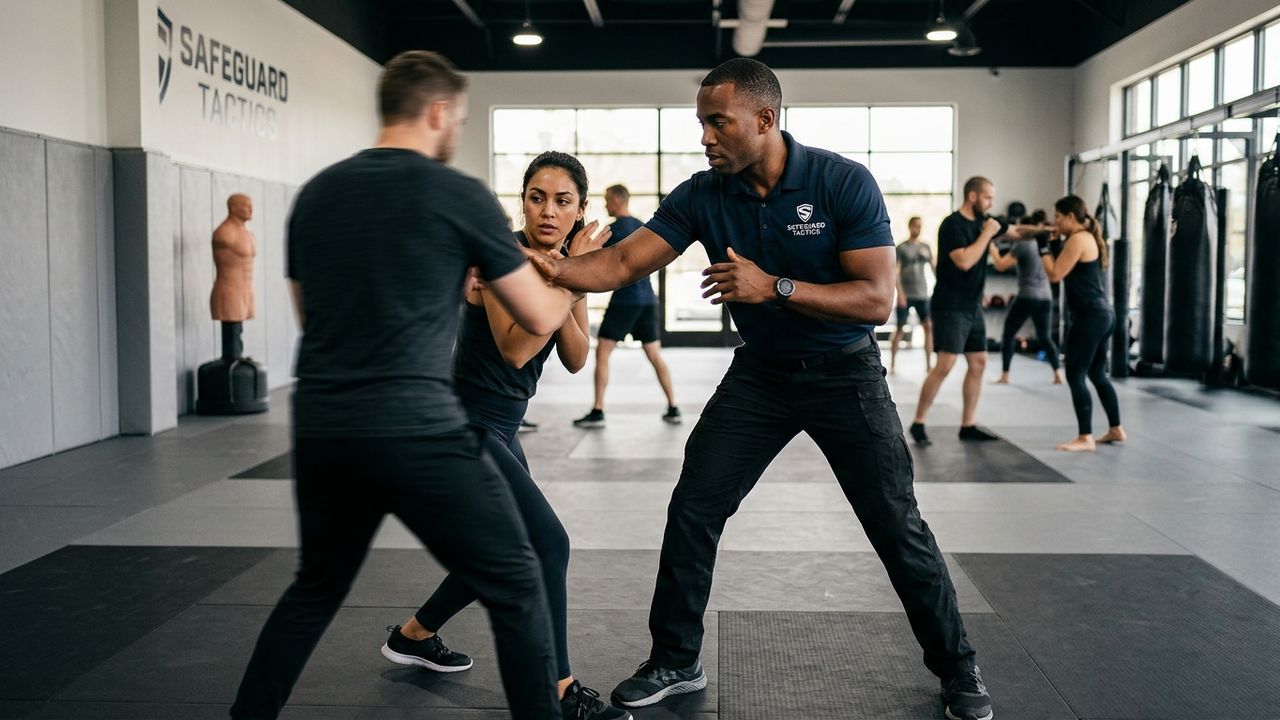
Drills teach your body what to do. Scenarios teach your mind when and why to do it. If your self-defense training stops at repetition, you are only halfway prepared. Scenario-based training closes the gap between practiced technique and real-world application, and it is the approach we rely on most to build genuine, lasting readiness.
The Difference Between Knowing a Technique and Actually Using It
There is a well-documented gap between what people can perform in a controlled drill and what they can execute under stress. When adrenaline spikes, fine motor skills degrade, tunnel vision sets in, and the brain searches for a familiar pattern to follow. If your only training reference is a slow, cooperative drill with a compliant partner, your brain has very little to pull from when the situation is chaotic and unscripted.
Scenario-based training introduces pressure, unpredictability, and context. We put participants in situations that mirror real threats, complete with verbal confrontation, environmental obstacles, and role-players who do not follow a script. That pressure is not there to overwhelm anyone. It is there to build the kind of stress inoculation that makes technique accessible when it matters most.
What Does the Research Say About Stress and Skill Retention?
The Federal Bureau of Investigation and the Department of Homeland Security have both emphasized in their workplace violence prevention resources that realistic, scenario-driven training significantly improves response behavior compared to passive instruction alone. The core finding is consistent across disciplines: people respond in emergencies the way they have trained, not the way they have been told. That distinction is everything.
This is why we structure our self-defense training programs around progressive scenario work. We start with foundational technique, yes, but we move quickly into applied situations where participants have to read cues, make decisions, and act under simulated pressure. You can learn more about how we approach this on our Self-Defense Training service page.
How We Build Scenarios That Actually Reflect Real Threats
Not all scenarios are created equal. A scenario that does not reflect the actual environment or threat profile of your group is just theater. We design our situations around the specific context our clients operate in. For a corporate team, that might mean a parking garage confrontation or an aggressive encounter in a hallway. For a healthcare group, it might involve a patient escalation in a confined space. For civilians, it could be a carjacking attempt or a follow-home situation.
We layer in the elements that make real threats dangerous: surprise, verbal aggression, ambiguity about intent, and the presence of bystanders. Participants learn to assess before they act, to use verbal de-escalation when it is viable, and to apply physical technique only when it is genuinely necessary. That decision-making layer is something no isolated drill can teach.
Why De-Escalation Is Part of Every Scenario We Run
Physical self-defense is a last resort, and we train it that way. Every scenario we design includes a decision point where verbal communication, boundary-setting, or disengagement is the right call. We want participants to leave with a full toolkit, not just a set of strikes and holds. The ability to read a situation accurately and respond proportionally is a skill that requires practice just as much as any physical technique.
This integrated approach reflects the methodology behind our instructor credentials. Our instructors hold an IKI (Israeli Krav International) Certified Instructor credential, Brazilian Black Belt credential, Monadnock Defensive Tactics (MDTS) Instructor credential, and a Personal Trainer certification. Each of those disciplines emphasizes practical, pressure-tested application over performance-based technique, and that philosophy runs through every scenario we build.
Who Benefits Most From Scenario-Based Self-Defense Training?
The short answer is everyone. But some groups see especially high returns on this kind of training. Corporate teams benefit because workplace violence is a real and documented risk, and most employees have never been given any practical framework for responding to it. Law enforcement professionals benefit because scenario work supplements their existing training with fresh perspectives and refined technique under pressure. Civilians benefit because they often have no prior training baseline at all, and scenarios give them a realistic picture of what a threat actually looks and feels like before they ever encounter one.
We also work with healthcare teams, educational staff, and other professional groups who face elevated interpersonal risk in their daily work. In every case, we tailor the scenario content to the specific population and environment. Generic training produces generic results. Specific training produces specific readiness.
What Should You Look for When Searching for Scenario-Based Self-Defense Training Near Me?
When you are evaluating any provider for scenario-based self-defense training near you, ask these questions. Does the curriculum include both physical technique and decision-making under stress? Are scenarios customized to your environment, or are they generic? Are instructors credentialed in systems that have been tested in real-world contexts? And critically, does the provider come to you, or do you have to disrupt your team to travel to a facility?
We check every one of those boxes. We are a mobile training service, which means we bring the training to your location. Your team trains in the actual space where a threat could occur, which makes the scenario work dramatically more relevant and effective. There is no substitute for training in the environment you actually need to be prepared for.
If you are ready to move beyond drills and give your team the kind of training that builds real, applicable confidence, we are here for it. We serve Greater New Orleans and southeastern Louisiana, and because we are fully mobile, we come to you wherever you are. [Reach out today](https://incendiarytrainingservices.com/contact) to tell us about your group, your environment, and your goals. We will build a scenario-based program that fits all three.


